Case study · Computer vision
Waste Classification with EfficientNet-B0
Sorting waste into recyclable, organic, and other categories from images.
Problem
Recycling still depends heavily on manual sorting. The goal here was to classify waste into recyclable, organic, and other categories from images, so that automated separation systems can reduce landfill waste and support more sustainable handling.
Approach
The classifier uses transfer learning on EfficientNet-B0 pre-trained on ImageNet. The convolutional base is frozen and a small classification head is trained on the waste categories, with standard preprocessing and augmentation applied to the images.
Data & inputs
- Images resized to 224×224 pixels
- Three categories: recyclable, organic, and other
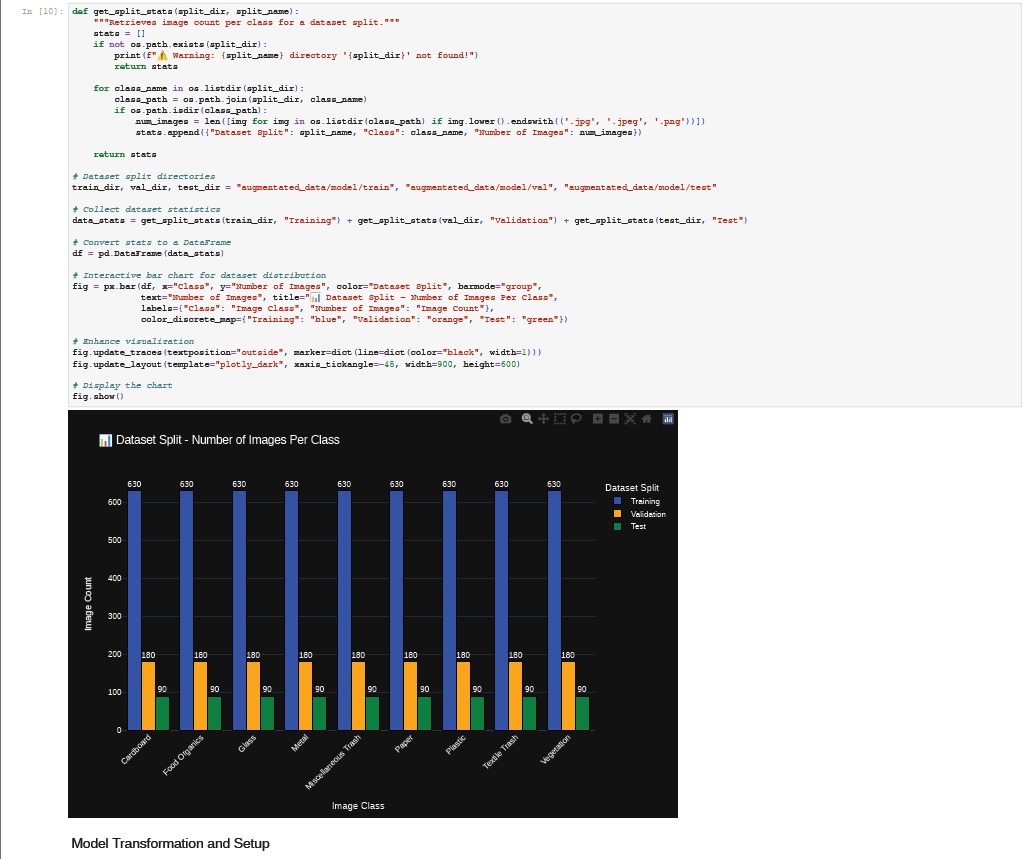
- A 70 / 15 / 15 split for training, validation, and testing
Methods & models
# Load EfficientNetB0 model
base_model = EfficientNetB0(include_top=False, input_shape=(224, 224, 3), weights='imagenet')

# Freeze the base
for layer in base_model.layers:
    layer.trainable = False

# Add custom classification head
model = tf.keras.Sequential([
    base_model,
    tf.keras.layers.GlobalAveragePooling2D(),
    tf.keras.layers.Dense(128, activation='relu'),
    tf.keras.layers.Dropout(0.3),
    tf.keras.layers.Dense(3, activation='softmax')
])

# Compile and train
model.compile(optimizer='adam', loss='categorical_crossentropy', metrics=['accuracy'])
model.fit(train_data, epochs=10, validation_data=val_data)
Results
The model reached ~94% accuracy on the held-out test set, with precision, recall, and F1-scores above 90% in each category.
Why it matters
A lightweight, reasonably accurate classifier is a practical building block for automated waste sorting — the kind of tool that can make recycling faster and reduce how much recyclable material ends up in landfill.
Tools & technologies
Figures
Selected visualizations
Excerpts from the analysis. Full notebook and high-resolution charts are in the repository.
Class distribution
Balance across the three waste categories.
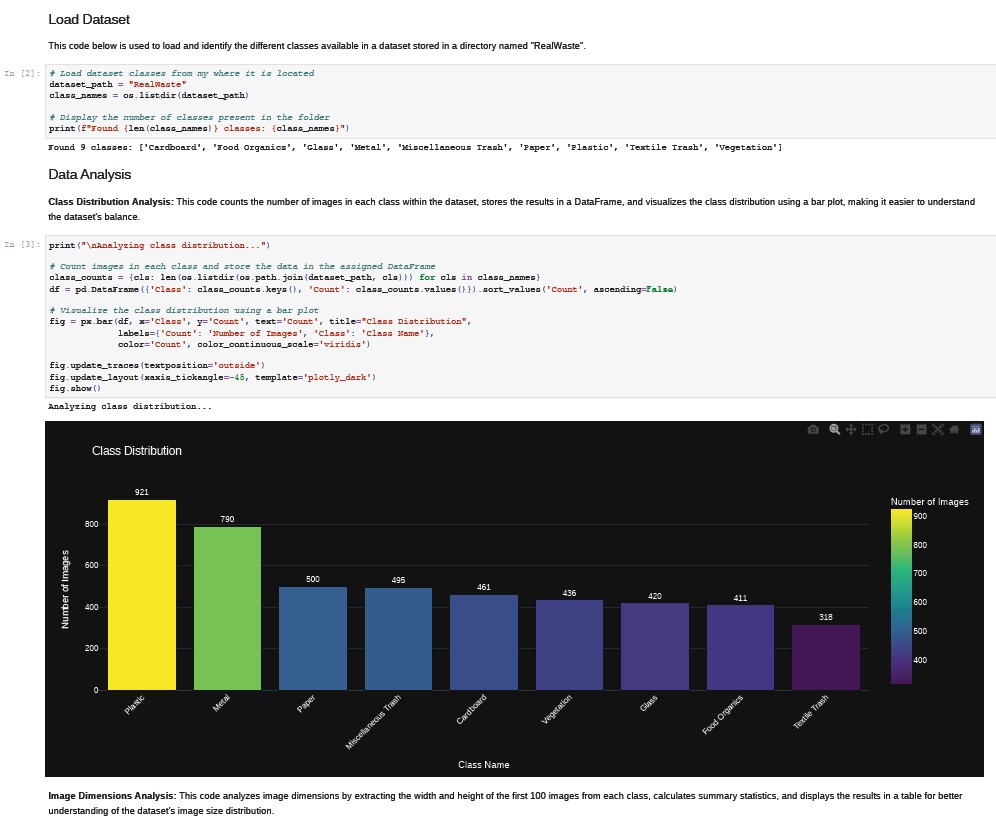
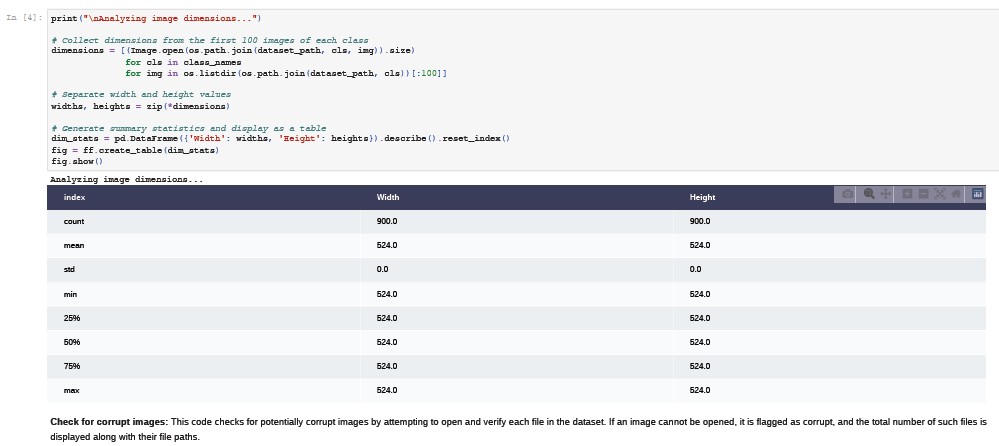
Image dimensions
Original size distribution before resizing to 224×224.
Dataset split
70 / 15 / 15 train, validation, and test sets.
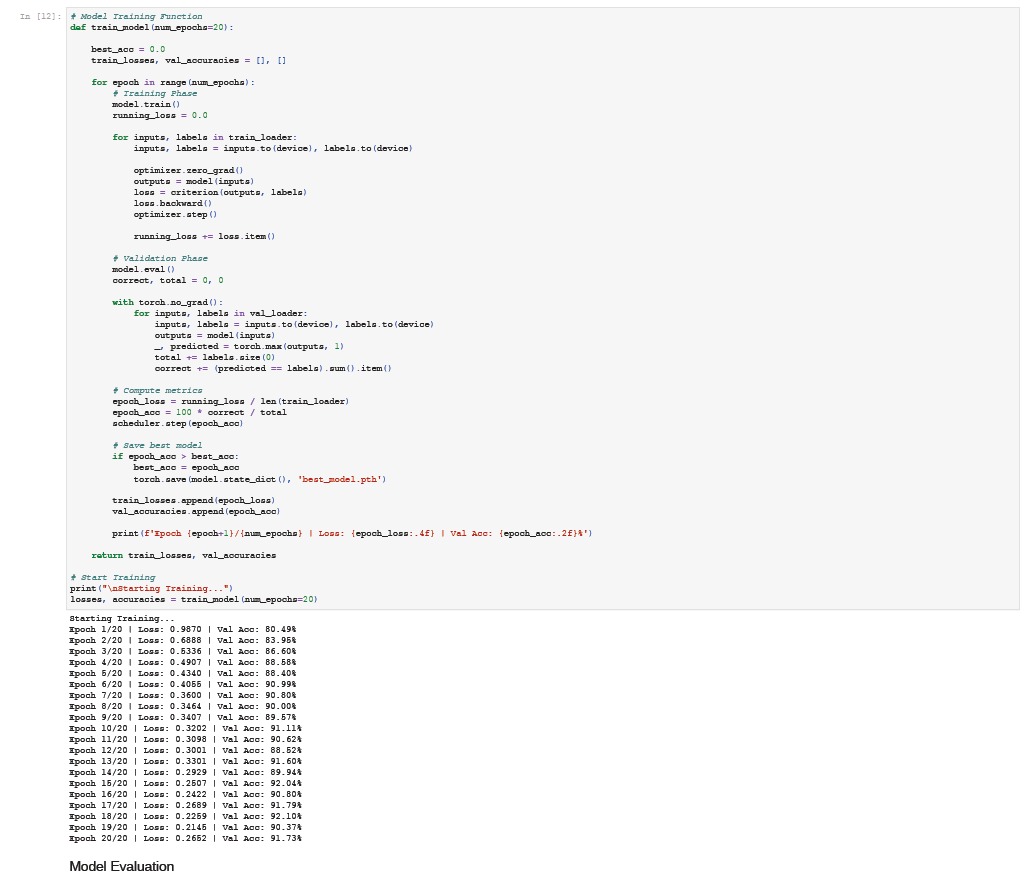
Training progress
Training and validation metrics across epochs.
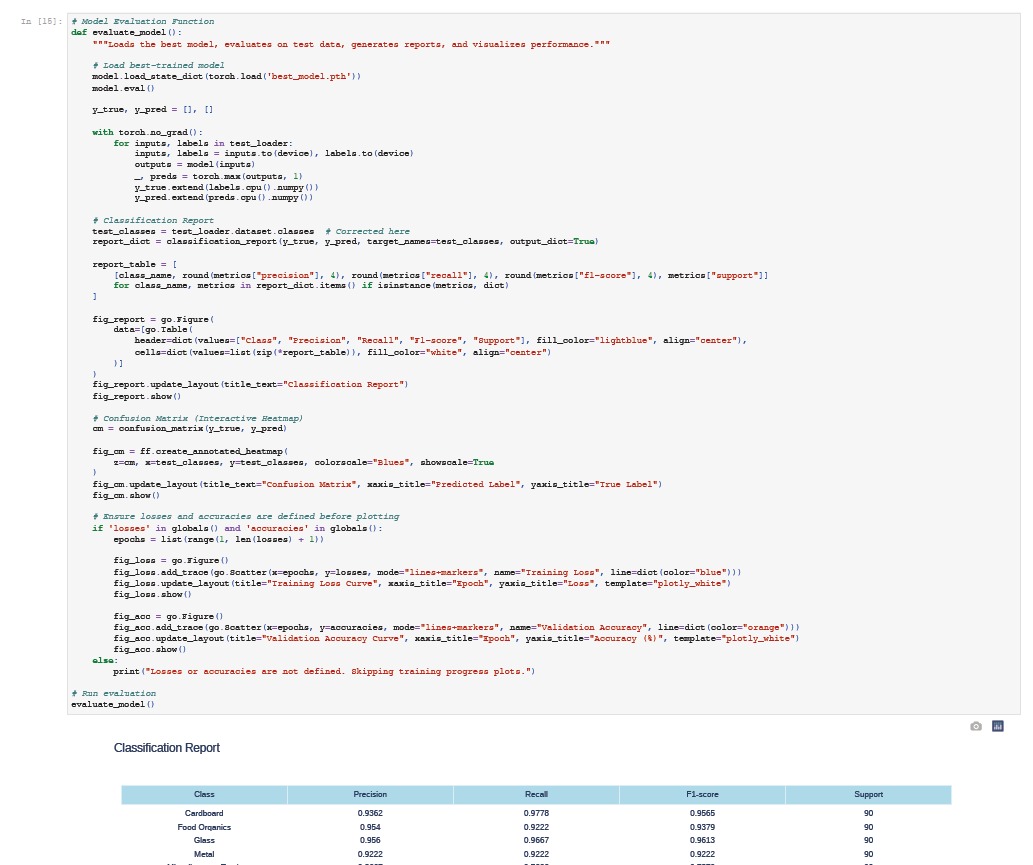
Classification report
Precision, recall, and F1 per category.
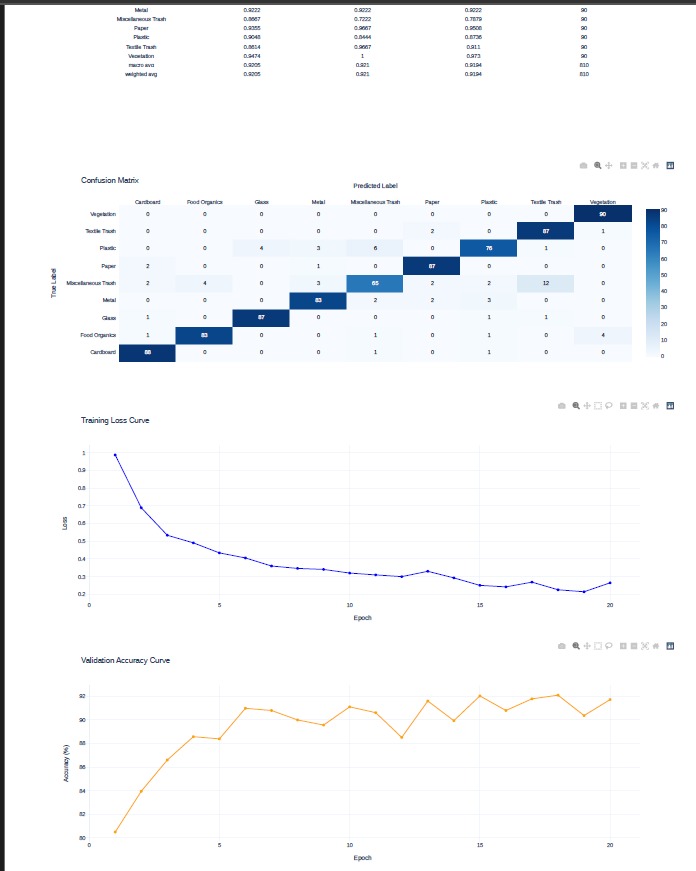
Confusion matrix
Prediction accuracy across classes.
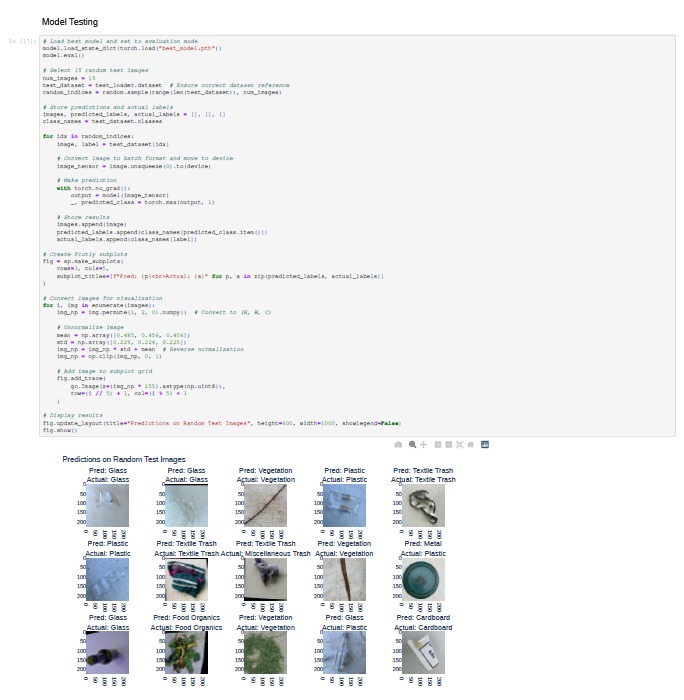
Sample predictions
Example classifications with confidence.
Code & links
- GitHub repository — full Jupyter notebook, training logs, and high-resolution visualizations.